

Honoring the Career of Karen Clark, Director of Nursing
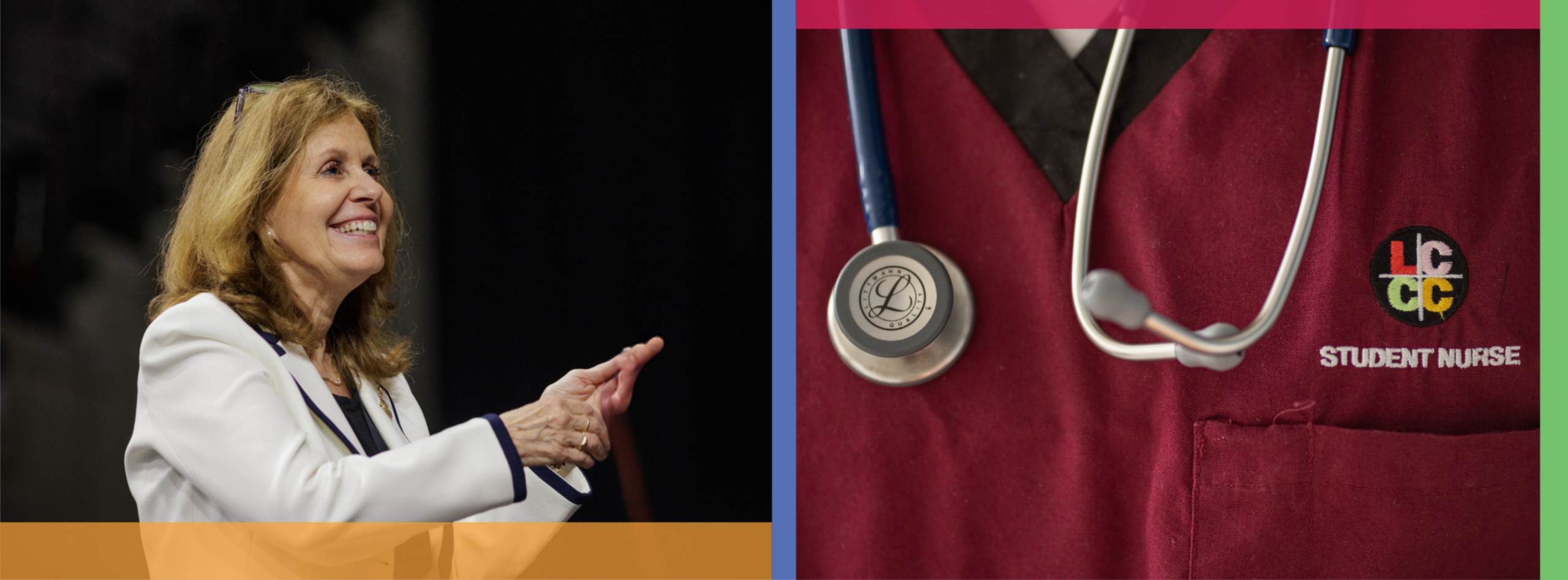
“Community college is one of the best kept secrets, especially in today’s world.”
A framed plaque sits beside Karen Clark’s desk, serving as a quiet reminder of the mission that first drew her to LCCC. She gestures toward the plaque as she reflects on her father, a former Trustee who served the college for 10 years. Through him, she developed a deep appreciation for the mission and impact community colleges provide.
Clark began working at LCCC in 2009 as a clinical adjunct professor before becoming a full-time faculty member in 2011. Over the years, she helped oversee both the RN and practical nursing programs while contributing to student support and the daily operations of the nursing programs.
Clark, the oldest of five, explained that although she was not a community college graduate herself, her father strongly believed in the importance of accessible education and service to the community.
Student Support and Community Impact
During her time at LCCC, Clark witnessed the nature of community college, where students balance jobs, families, and academic responsibilities. “Students have a lot on their plates,” she said.
She credits Larissa Verta, Vice President of Academic Services and Student Development, as a mentor and an important influence in shaping her approach to student support. Verta, she noted, modeled availability and consistent guidance, qualities Clark worked to carry into her own practice.
Clark described her role as an act of service. “I saw it as service to others and the contributions I could make,” she said. “I am thankful each and every day while working at LCCC.”
Growth in the Nursing Program
Students can often be seen working with simulation mannequins—a key development in the program’s hands-on learning approach.
Clark played a role in the development and continued use of these simulation labs. She highlighted their importance in nursing education. “The mannequins can do vital signs, change their respirations, heart rate, heart rhythm,” she said. Students practice procedures such as inserting nasogastric, feeding, and catheter tubes.
The simulation lab also includes a birthing mannequin, allowing students to experience the delivery process in a controlled setting. VR goggles give students a first-person view of the birthing process, allowing them to observe fetal movement and delivery in real time.
Clark noted that this type of training helps bridge the gap between classroom learning and clinical experience, especially in cases where students may not encounter certain situations during their practical rotations.
She also emphasized the broader impact of the program on the local community. Many graduates remain in the area after completing their degrees, helping strengthen the region’s healthcare workforce. “We provide the community with quality, professional nurses that remain local to the area,” she said.
Reflection and Legacy
When asked about student interactions that have stayed with her, Clark said, “All of it. Students are in and out all of the time. Some just really need support. I constantly interact with students. I try to be at all campuses.”
She added that students and peers have been a constant source of motivation throughout her career. “The big thing for me is service to the community,” she said. “My goal is helping students get to their goals.” 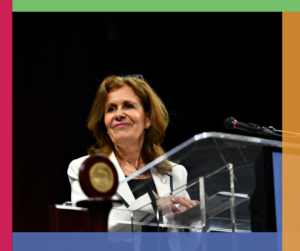
Clark described LCCC as a place where student support is central. She said her time at the college allowed her to provide a meaningful service to others and that she has tried to remain grounded in her core beliefs throughout her career.
When asked what advice she would give to future students, she said, “Follow your dream, follow your passion, and just stay with it.” When asked what she will miss most, she said, “The people.” Clark hopes students and colleagues remember the importance of staying true to who they are.
In retirement, Clark enjoys spending time with her family, gardening, golfing, traveling with her husband, and time with her grandchildren. Looking back on her time at LCCC, she described it in one word: “Fulfilling.”
